
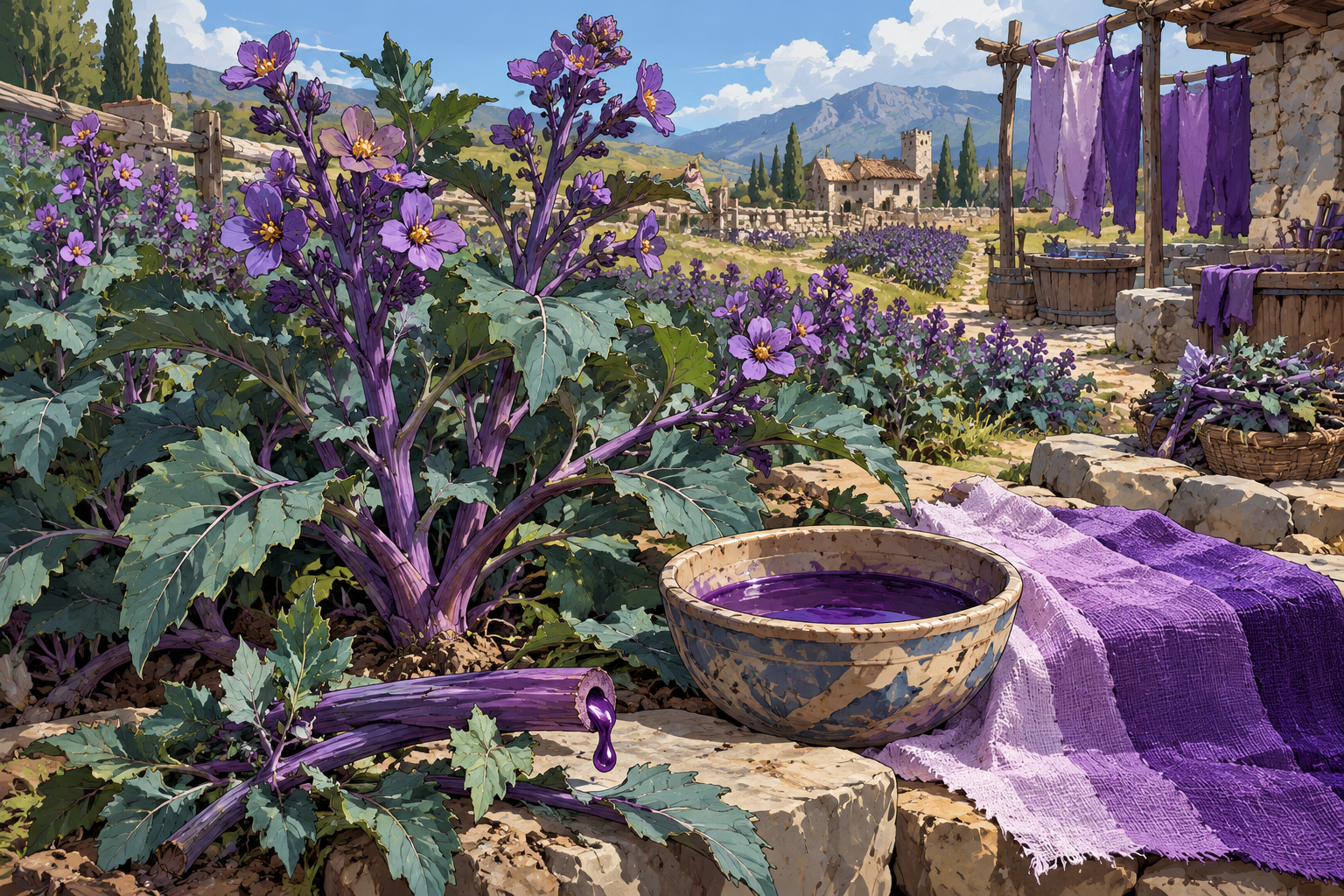
Violet sap
Violet sap grows almost everywhere: floodplain meadows, roadsides and garden margins. This low perennial has blue-green serrated leaves, small violet flowers and fleshy ribbed stems. Break a stem and a thick purple sap appears.
Dyers press the cut stems, strain the sap and fix it to cloth with alum. Diluted pigment makes lilac; repeated dyeing produces deep violet. The plant is easy to grow and transport dried, so purple cloth belongs to northern carters, steppe artisans and Norregdar residents as well as the wealthy. Fabric quality and durable finishing reveal wealth more than the color itself.
Harvesters leave roots and some flowering shoots for seed. Sap stains hands for days and is not a drink. Before frost, stems dry under shelters; settling basins keep dye water away from drinking-water intakes.